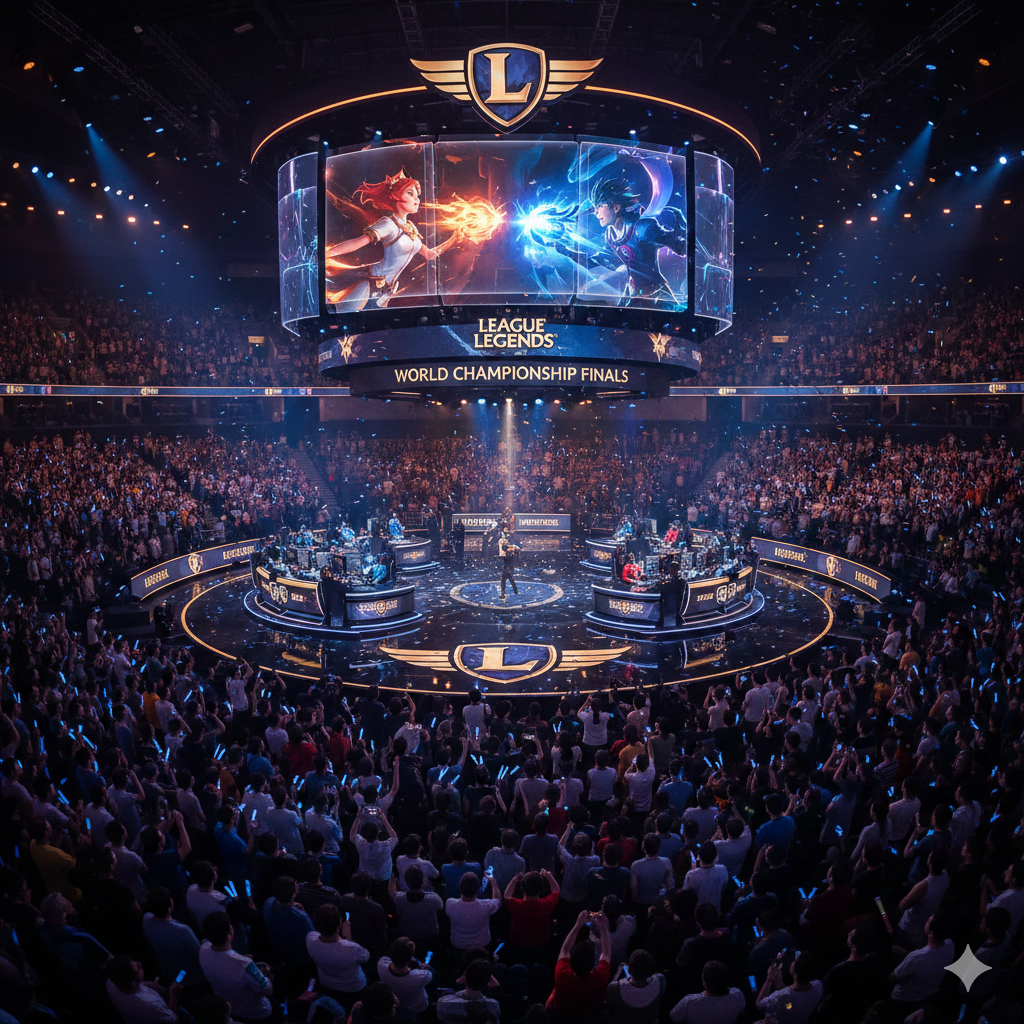
Few games have had as profound an impact on the esports and online gaming scene as League of Legends. Developed by Riot Games, League of Legends, commonly abbreviated as LoL, has become a cornerstone of competitive gaming since its release in 2009. Combining fast-paced gameplay, strategic depth, and a diverse roster of champions, League of Legends has attracted millions of players worldwide and created one of the most competitive esports ecosystems in history.
Unlike many traditional video games, League of Legends blends team-based strategy, role specialization, and real-time decision-making. Players must coordinate with teammates, manage resources, and adapt to constantly evolving in-game scenarios. Its combination of action, strategy, and skill has made LoL not only a game but also a cultural phenomenon that transcends borders and platforms.
The Development and Launch of League of Legends
League of Legends was developed by Riot Games with the vision of creating a competitive online game that was accessible, skill-based, and constantly evolving. The game was officially released in October 2009, and its inspiration was drawn from the popular Warcraft III custom map called Defense of the Ancients (DotA). Riot Games wanted to refine the concept into a standalone game that emphasized balanced gameplay, team coordination, and continuous updates.
From its inception, League of Legends focused on creating a living game environment. Regular patches, new champions, seasonal events, and in-game cosmetics ensure that the game evolves over time. This continuous improvement strategy has kept LoL relevant and engaging for more than a decade.
Gameplay Mechanics
League of Legends is a Multiplayer Online Battle Arena (MOBA) game where two teams of five players compete on a map called Summoner’s Rift. Each player selects a unique champion, each with special abilities, strengths, and weaknesses. The goal is to work as a team to destroy the opposing team’s Nexus, located in their base, while defending one’s own.
Team Roles
Each team member plays a specific role, including:
- Top Laner: Typically durable champions who control the top lane and absorb damage.
- Mid Laner: Often mages or assassins who can deal high damage and control the middle lane.
- Bot Laner (ADC): Ranged damage dealers focused on defeating enemies and objectives.
- Support: Champions who protect and assist teammates, controlling vision and crowd control.
- Jungler: Roams the map, eliminating neutral monsters and assisting lanes strategically.
Coordination between these roles is essential for success. Team fights, map control, objective capturing, and vision management are critical elements that determine the outcome of a match.
Objectives and Strategy
Players must secure objectives like towers, dragons, barons, and inhibitors to gain strategic advantages. Each objective provides buffs or gold that can help a team dominate the map. Strategic planning, timing, and map awareness are as important as individual skill, making LoL a highly strategic and competitive experience.
Champions and Abilities
League of Legends features over 160 champions, each with a unique playstyle and abilities. Champions are categorized into different classes, including mages, assassins, tanks, supports, and marksmen. Mastery over a champion’s abilities, cooldowns, and combos is crucial for high-level gameplay.
The diversity of champions allows for countless strategies and team compositions. Players must adapt to enemy selections and synergize with teammates, creating a dynamic and ever-changing gameplay experience.
Competitive Esports Scene
League of Legends has one of the most robust esports ecosystems in the world. Professional leagues, including the League of Legends Championship Series (LCS) in North America, League of Legends European Championship (LEC), and the League of Legends Pro League (LPL) in China, attract millions of viewers worldwide.
Global tournaments like the League of Legends World Championship feature large prize pools and top-tier competitive play. Teams compete in rigorous seasons, showcasing exceptional skill, strategy, and teamwork. LoL esports has also become a career path for professional players, coaches, analysts, and content creators, solidifying its position as a premier competitive game.
Community and Content Creation
LoL thrives on a dedicated community that contributes to the game’s long-lasting popularity. Streamers, YouTubers, and fan creators produce content ranging from gameplay tutorials and strategy guides to humorous skits and professional match analysis. Platforms like Twitch and YouTube have helped introduce new players and maintain engagement within the community.
Community events, fan art, cosplay, and lore discussions further enrich the player experience, creating a sense of belonging and global connectivity among gamers. Riot Games also actively listens to community feedback, adjusting balance and gameplay to maintain fairness and competitiveness.
Continuous Updates and Seasonal Events
Riot Games’ commitment to updates ensures that League of Legends remains fresh and exciting. Each patch may introduce new champions, rework existing ones, adjust item balances, or improve quality-of-life features. Seasonal events and thematic skins allow players to personalize their experience while keeping the game visually dynamic.
Additionally, Riot regularly introduces new game modes, temporary events, and collaborations, such as partnerships with popular media franchises. These updates create a vibrant ecosystem that keeps players engaged year after year.
Cultural Impact
League of Legends has transcended gaming to influence popular culture. Its characters, music, and cinematic trailers have reached audiences beyond the gaming community. Musical groups like K/DA and in-game events like True Damage have combined gaming with entertainment, bridging the gap between esports and mainstream media.
LoL’s impact on streaming culture, professional gaming, and fan communities has created a lasting legacy. Millions of players worldwide continue to compete, collaborate, and socialize within the LoL universe.
Conclusion
League of Legends is more than a multiplayer game—it is a global phenomenon that has shaped the esports and online gaming landscape. Its combination of strategic gameplay, diverse champions, competitive esports scene, and community-driven content has made it one of the most influential games of all time.
For players seeking a challenge that rewards skill, strategy, and teamwork, League of Legends offers an unparalleled experience. With its continuous updates, dedicated community, and thriving competitive ecosystem, LoL remains a dominant force in online gaming and a benchmark for the MOBA genre. 🎮