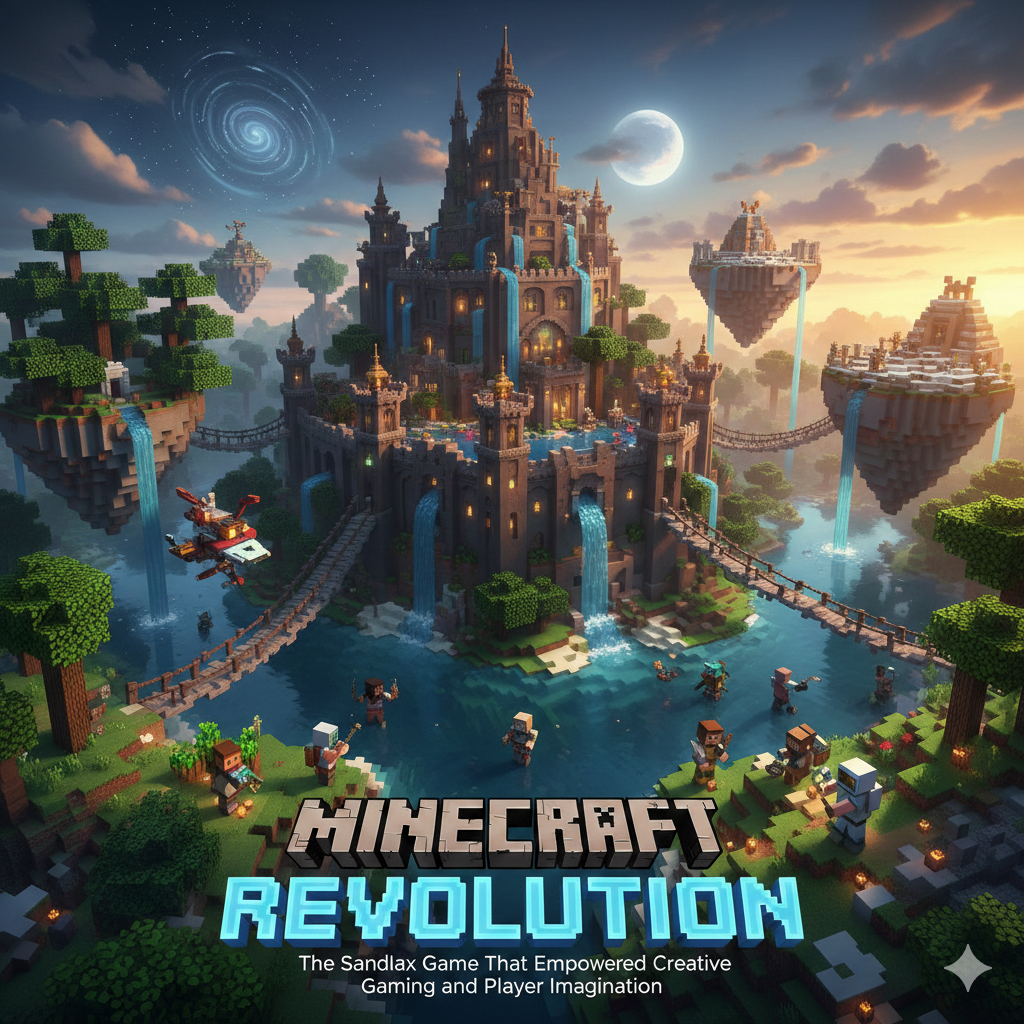
Few games in history have had as profound an impact on gaming culture as Minecraft. Since its initial release in 2011 by Markus Persson, commonly known as “Notch,” Minecraft has become a worldwide phenomenon. The game allows players to explore a vast, block-based world where imagination is the only limit. From building complex structures to surviving in harsh environments, Minecraft offers endless possibilities for creative and survival gameplay.
Unlike traditional games with strict objectives, Minecraft is a sandbox experience where players can set their own goals. Whether constructing architectural masterpieces, creating intricate redstone machines, or exploring caves for rare resources, Minecraft encourages creativity, experimentation, and problem-solving. Its universal appeal spans all ages, making it one of the most accessible and influential games of the decade.
The Development of Minecraft
Minecraft was initially created by Markus Persson in 2009 and gained rapid popularity during its alpha and beta testing phases. Its simple block-based graphics, intuitive crafting system, and open-ended gameplay set it apart from other games at the time. Players could gather resources, craft tools, and build structures in an expansive world without boundaries.
In 2014, Microsoft acquired Minecraft for $2.5 billion, further expanding its reach across multiple platforms including PC, consoles, and mobile devices. Microsoft’s support enabled the game to receive continuous updates, new features, and official expansions, ensuring long-term player engagement.
The game’s success can also be attributed to its community-driven approach. Player mods, fan-made servers, and custom maps have significantly contributed to Minecraft’s evolving gameplay and popularity.
Gameplay Mechanics
Minecraft’s gameplay is centered around two primary modes: Survival Mode and Creative Mode. Each mode provides a unique experience catering to different types of players.
Survival Mode
In Survival Mode, players must gather resources, craft tools, build shelters, and defend themselves against hostile mobs like zombies, skeletons, and creepers. The game emphasizes resource management, strategic planning, and exploration. Players also need to monitor health and hunger while venturing through caves, forests, and mountains to survive.
Creative Mode
Creative Mode offers unlimited resources and the freedom to build without constraints. Players can fly, instantly place or break blocks, and experiment with complex architectural designs. This mode is ideal for aspiring builders, designers, and players who want to focus purely on creativity rather than survival.
Other Modes
Minecraft also includes Adventure Mode, designed for player-created maps and stories, and Spectator Mode, which allows players to explore worlds without interacting with them. These modes further enhance the game’s versatility and replay value.
Multiplayer and Community Engagement
Minecraft’s multiplayer features allow players to join servers where they can collaborate or compete with others. From massive survival worlds to creative building servers and mini-games, the multiplayer experience adds a social dimension to the game. Communities host large-scale events, contests, and collaborative projects that keep the game dynamic and engaging.
Popular servers like Hypixel and Mineplex have attracted millions of players, offering unique mini-games, challenges, and experiences beyond the base game. These servers encourage teamwork, strategy, and friendly competition among players worldwide.
Redstone and Technical Creativity
One of Minecraft’s most unique features is Redstone, a material that allows players to create complex circuits, machines, and even simple computers within the game. From automated farms to intricate traps and mini-games, Redstone enables technically minded players to push the boundaries of in-game creativity.
Redstone mechanics have also inspired educational programs, teaching students basic programming logic and engineering concepts in a fun, interactive environment.
Modding and Customization
Minecraft has one of the most extensive modding communities in gaming. Players can install mods to enhance graphics, add new creatures, create custom gameplay mechanics, or introduce entirely new worlds. This modding ecosystem has significantly extended the game’s lifespan and appeal.
Minecraft’s flexibility also allows players to customize skins, textures, and even entire game mechanics. This personalization ensures that no two players’ experiences are ever identical, adding to the game’s replay value and creativity.
Educational Impact
Minecraft has also made a significant impact in education. With platforms like Minecraft: Education Edition, teachers use the game to teach subjects ranging from mathematics and science to history and art. The interactive, engaging nature of the game makes learning fun and immersive for students, combining problem-solving skills with creativity.
Continuous Updates and Expansions
Minecraft’s developers regularly release updates and expansions that add new biomes, creatures, blocks, and gameplay features. These updates keep the game fresh and continuously challenge players to explore, experiment, and adapt.
Seasonal events, community challenges, and official DLCs ensure that Minecraft maintains its relevance in the gaming industry even years after its initial release.
Conclusion
Minecraft is more than just a game—it is a platform for creativity, learning, and collaboration. Its combination of survival mechanics, creative freedom, technical challenges, and social interaction has made it one of the most influential games of all time. From casual players to professional builders and educators, Minecraft provides an endless playground for imagination and innovation.
Its impact on gaming culture, education, and online communities is unmatched. With continuous updates, multiplayer features, and an active global community, Minecraft remains a timeless game that continues to inspire creativity and exploration for players of all ages. 🎮